


Two SLU Researchers Named Senior Members by the National Academy of Inventors
Maggie Rotermund
Senior Media Relations Specialist
maggie.rotermund@slu.edu
314-977-8018
Reserved for members of the media.
ST. LOUIS -- Two Saint Louis University researchers were named to the 2026 Class of Senior Members of the National Academy of Inventors (NAI). They are among 230 emerging inventors from across 824 NAI member institutions.
SLU’s 2026 inductees are Christopher Arnatt, Ph.D., associate professor of chemistry, and Fran Sverdrup, Ph.D., associate professor of biochemistry and molecular biology.
Chris Arnatt, Ph.D.
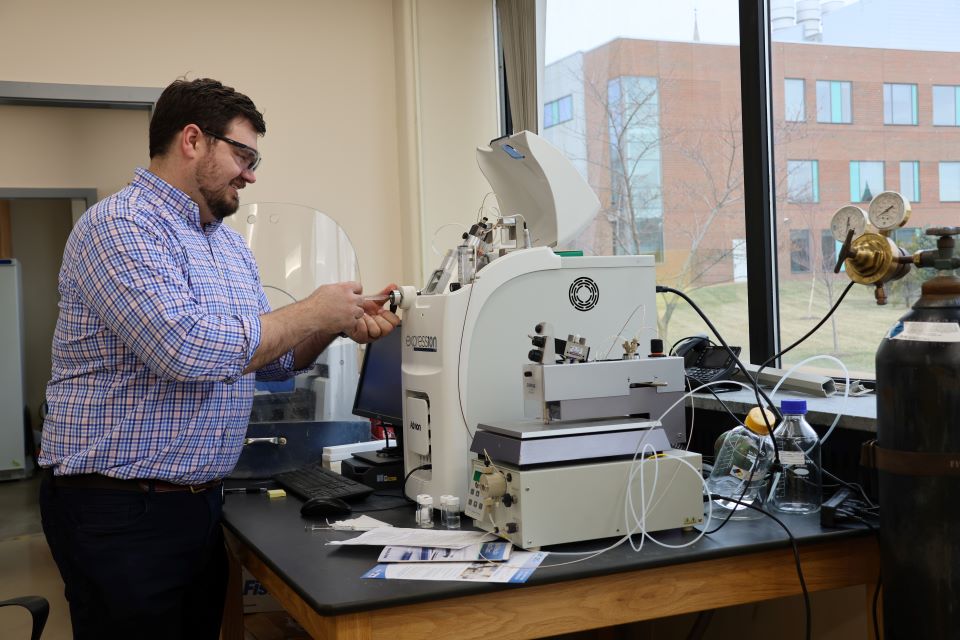
Arnatt joined Saint Louis University in 2015, beginning a decade of discovery focused on developing small molecules as probes to study biological systems, and developing an expertise in creating compounds targeting orphan G protein-coupled receptors (GPCRs), including for treatment of pain and cancer.
Arnatt received his B.S. in Chemistry from Hampden-Sydney College, and Ph.D. in Medicinal Chemistry from Virginia Commonwealth University. A postdoc at the National Institute of Standards and Technology studying induced pluripotent stem cells and automated microscopy led to his first patent on asymmetric fluorophores (US9951271).
Arnatt’s research has been rewarded with six additional patent awards, collaborations across the University, over 40 publications, and invited presentations on targeting orphan GPCRs for pain and G protein-coupled estrogen receptors (GPER) specifically in cancer and other diseases.
Arnatt has described his discovery and innovation approach as creating new molecules to decipher cellular processes and disease states, noting his work has been used to target pain pathways caused by a variety of sources, from cancer to gall stones. This work has resulted in seven awarded patents in at least four distinct areas, multiple pending applications, IP licensures, industry collaborations, identification of therapeutic targets, potential therapeutic molecules, and the founding of new companies.
His lab currently includes six graduate students and six undergraduate students.
"I think this is something unique to SLU - we have undergraduates who often spend 5-6 semesters working in the lab," he said. "The sciences have a foundational way of speaking, whether that be in chemistry or cell biology. Our students are speaking that language when they are applying for jobs."
Arnatt is currently a principal investigator on two multi-PI grants from the NIH to develop and study selective GPCR agonists for the treatment of neuropathic pain, and has earned previous support from the NSF, NIH, and internal seed and growth funding programs. He also holds a secondary appointment within the Department of Pharmacology and Physiology at the Saint Louis University School of Medicine.
"There is a collaborative nature in our department and across the University to work together," Arnatt said. "This honor for myself is also a testament to the investment of the University and those in the patent office who back us up."
Fran Sverdrup, Ph.D.
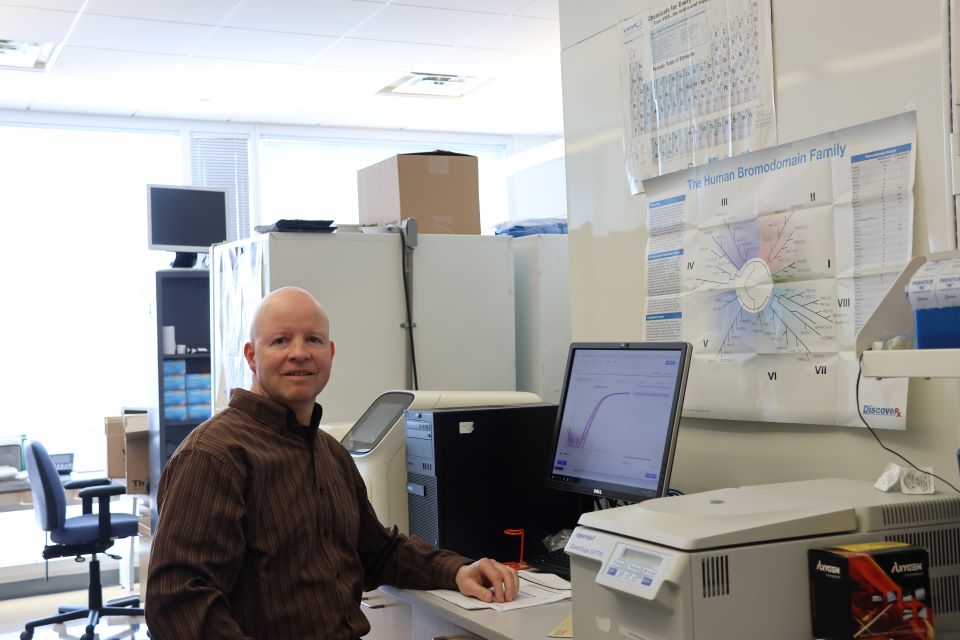
In his 15 years at Saint Louis University, Sverdrup’s research has focused on drug discovery for facioscapulohumeral muscular dystrophy (FSHD), parasitic diseases including cryptosporidiosis, and epigenetic drug targeting. His drug discovery work seeks out and advances the best therapeutic tools to address diseases of unmet need.
When he began his work, FSHD had no treatments, no clinical trials ongoing, and little pharmaceutical company interest. Sverdrup established a screening assay for inhibitors of myotoxic DUX4 expression which resulted in an issued method of use patent for BET inhibitors to treat FSHD (US9814728). This patent was optioned by Ultragenyx Pharmaceutical, and led to a 10-year multi-million dollar research partnership between the company and Sverdrup’s laboratory. Initially optimizing Sverdrup’s BET inhibitors, the partnership evolved to create other treatment modalities and expand the understanding of FSHD biology, resulting additional pending patents and an expanded FSHD therapeutic pipeline.
"Our focus had long been in drug discovery," Sverdrup said. "There are now 25 companies doing work and several on-going clinical trials."
With positive signs from recent clinical trials, Sverdrup is focusing his latest efforts on therapy and finding ways to rebuild lost muscle in FSHD patients.
Sverdrup received his Ph. D. from the University of Pittsburgh School of Medicine and completed postdoctoral training at Tufts Medical School. His first patent was earned for connective tissue growth factor (US6358741B1) while designing antisense oligonucleotides at Sequitur Inc. In eleven years at pharmaceutical companies, he led assay development for inhibitors of viral DNA replication and transcription, and pursued new target discovery in inflammation and immunology.
In 2010 Sverdrup moved to SLU. He has been awarded one patent from his work at Saint Louis University, with two additional patents pending. He has more than 50 publications and his research at Saint Louis University has brought in more than $6 million in funding from the NIH, Friends of FSHD, industry partners, and others.
"SLU has always been a supportive environment for translational research," Sverdrup said.
NAI Senior Members are active faculty, scientists, and administrators from NAI Member Institutions who have demonstrated remarkable innovation producing technologies that have brought, or aspire to bring, real impact on the welfare of society. They also have growing success in patents, licensing, and commercialization, while educating and mentoring the next generation of inventors.
The 2026 class of Senior Members will be honored during the Senior Member Induction Ceremony at NAI’s15th Annual Conference June 1-4, 2026 in Los Angeles, California.
About Saint Louis University
Founded in 1818, Saint Louis University is one of the nation’s oldest and most prestigious Catholic research institutions. Rooted in Jesuit values and its pioneering history as the first university west of the Mississippi River, SLU offers more than 15,300 students a rigorous, transformative education that challenges and prepares them to make the world a better place. As a nationally recognized leader in research and innovation, SLU is an R1 research university, advancing groundbreaking, life-changing discoveries that promote the greater good.